

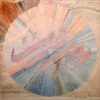

| Dimensions | 29 × 19,7 cm |
|---|---|
| Artist | Fadi Bahlawan |
| Artist Origin | Lebanon |
| Medium | Painting |
| Material | Ink on paper |
| Movement | Caligraphy, Contemporary |
| Artist | Fadi Bahlawan |

The Symbol of the Blue Eye in Islamic Culture
The blue eye, commonly referred to as the “Nazar,” holds a significant and intriguing place within Islamic culture. While its origins may be traced to various cultures and civilizations across time, the blue eye’s presence and symbolism in Islamic communities are profound and unique.
Embedded within the fabric of Islamic beliefs, the concept of the Evil Eye is a recognition of the potential harm that can arise from envy and malevolent intentions. This concept aligns with the teachings of the Quran, where the importance of seeking protection from negative energies is emphasized. The blue eye, then, emerges as a protective emblem, symbolizing the need to shield Typically depicted as an intricate and stylized blue eye, this symbol is believed to possess the power to reflect back negativity, effectively safeguarding individuals, their possessions, and their surroundings. The choice of blue is intriguing, as it often represents calmness, spirituality, and
protection in various cultures, including Islamic. As a result, the blue eye becomes more than just a symbol; it becomes a representation of serenity and security, resonating deeply with those who embrace its meaning.
The blue eye’s presence is palpable in various aspects of Islamic culture. Amulets, commonly known as “nazar boncuğu” in Turkish, are prevalent and serve as tangible reminders of protection. These amulets are often hung in homes, cars, and workplaces, reflecting the belief in the blue eye’s defensive properties. Furthermore, blue eye jewelry, encompassing necklaces, bracelets, and earrings, is worn to invoke this protective aura in daily life.
Beyond personal accessories, the blue eye extends its influence to architectural designs. Many mosques and buildings within Islamic culture feature intricate blue tiles and mosaics, creating an atmosphere of sanctity and shielding against negative influences. This architectural integration reinforces the blue eye’s significance as a symbol that goes beyond individual beliefs, becoming a collective representation of safeguarding within the community.
While the blue eye undoubtedly carries weight in Islamic culture, its interpretation and practice may vary among different communities. Some may approach it as a means of strengthening their faith and seeking divine protection, while others might raise concerns about potentially veering into superstition.
In conclusion, the symbol of the blue eye, or the Nazar, serves as a multifaceted emblem within Islamic culture. It encapsulates protection against the Evil Eye, resonating with the teachings of the Quran. As a visual representation of spirituality and defense, the blue eye finds its place in amulets, jewelry, and architecture, serving as a tangible reminder of seeking protection from negative energies. Its presence reflects the intricate interplay between cultural beliefs and religious teachings, enriching the tapestry of Islamic culture.
| Dimensions | 29 × 19,7 cm |
|---|---|
| Artist | Fadi Bahlawan |
| Artist Origin | Lebanon |
| Medium | Painting |
| Material | Ink on paper |
| Movement | Caligraphy, Contemporary |
| Artist | Fadi Bahlawan |
More from this artist

Fadi Balhawan

Fadi Balhawan

Fadi Balhawan

Fadi Balhawan

Fadi Balhawan

Fadi Balhawan

Fadi Balhawan

Sold
Fadi Balhawan